
How a midnight blaze at the Britannia Ironworks shook Gainsborough to its foundations
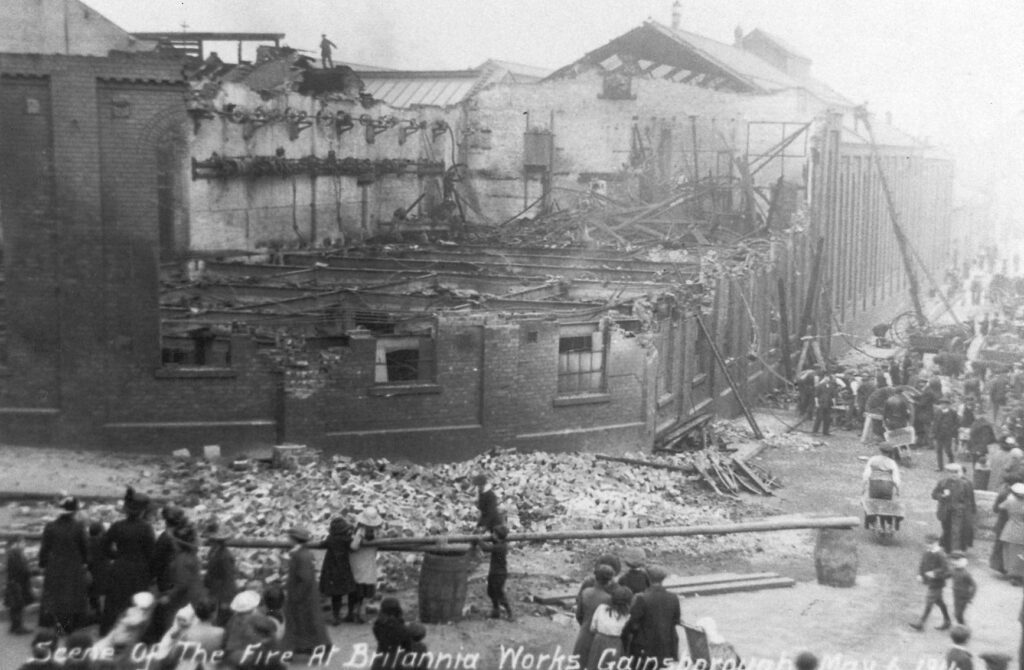
It began at midnight. By the time the people of Gainsborough had gathered in the streets, the north-eastern corner of Marshalls was a raging furnace, and the end of Spring Gardens was blocked by fallen walls.
The fire that tore through the Britannia Ironworks in May 1914 was, in the words of those who recorded it, one of the most disastrous fires ever seen in the town. Within half an hour of the alarm being raised, several departments were ablaze. The heat was so intense and the spread so swift that by morning the scale of the destruction was clear: thousands of pounds of damage and hundreds of workers facing an uncertain future.
The Heart of Gainsborough Industry
Marshalls had stood at the centre of Gainsborough’s working life for generations. The Britannia Ironworks was not simply a factory; it was a statement of what the town had become in the industrial age. Its products went out across Britain and beyond, and its workforce formed a community within a community, bound together by shift patterns, shared skills and the rhythms of the foundry floor.
To see it burning, the flames visible from streets all across the town, was to see something of Gainsborough itself under threat. The scale of the fire placed immense pressure on the local fire brigade, and reports of the night describe a desperate battle to prevent the blaze spreading further into the surrounding streets.
“Within half an hour several departments were ablaze. The north-eastern corner was a raging furnace and the end of Spring Gardens was blocked by fallen walls.”
The Human Cost
Behind the figures of structural damage lay a human story. Hundreds of workers depended on Marshalls for their weekly wage. In the early months of 1914, war had not yet come to Europe, but hardship was always close at hand for working families in an industrial town. A catastrophic fire of this scale meant not just lost buildings but lost livelihoods, at least in the short term.
The Black Box Archive records the fire with the terse urgency characteristic of its era: the facts stated plainly, the drama contained in the numbers. Yet even through that plain language, the scale of what happened that night comes through. This was not a small workshop fire. It was a civic catastrophe.
Months Before the War
The timing carries its own heavy significance. May 1914 was, though no one knew it yet, a matter of weeks before the outbreak of the First World War. The men who fought that fire, and the men who lost their shifts to it, would soon face a different and far more terrible disruption. Within months, the town would be transformed by enlistment, loss and the vast machinery of a nation at war.
The fire at Marshalls sits, in the archive, as a moment caught just before everything changed: an industrial town at the height of its confidence, facing a local disaster that would, within the year, be overshadowed by something almost unimaginable.
What the Archive Tells Us
The Black Box Archive preserves this story as part of a broader picture of Gainsborough’s industrial life. Accidents, fires and structural failures appear throughout the records, testament to an era when the pace of industry often outran the pace of safety. The Marshalls fire is among the largest of these events and among the most vividly described.
For those researching Gainsborough’s working history, it offers a vivid entry point: a single dramatic night that illuminates the vulnerability of even the most established institutions, and the resilience of the communities that depended on them.
